
This visit to Saint-Gaudens National Historical Park in Cornish, New Hampshire, feels very different from our visits to the Civil War and Revolutionary War battlefields on this trip.

It is quiet, artistic, reflective, with a really subtle, beautiful quality — almost like stumbling into a hidden creative retreat from America’s Gilded Age.

The park preserves the home, studios, and gardens of Augustus Saint-Gaudens, considered one of America’s greatest sculptors. Have we heard about him before… no!! But have we seen some of his work… probably! He designed famous Civil War monuments and the gold “double eagle” coins commissioned by President Theodore Roosevelt.

The park sits in the rolling countryside of western New Hampshire near the Connecticut River, with views toward Vermont and Mount Ascutney. The landscape itself is actually part of the experience.

We arrived via winding rural roads and then suddenly encountered elegant gardens, shaded walking paths, and a gracious old estate called “Aspet.” Unfortunately, we arrived on a Wednesday, one of the days the buildings are closed. BUT, the good thing is… the sculpture gardens are the heart of the visit, and the outdoors was wide open to us!!

Large bronze statues appear among hedges, flowers, and lawns. Some are monumental Civil War memorials; others are quieter portrait works.


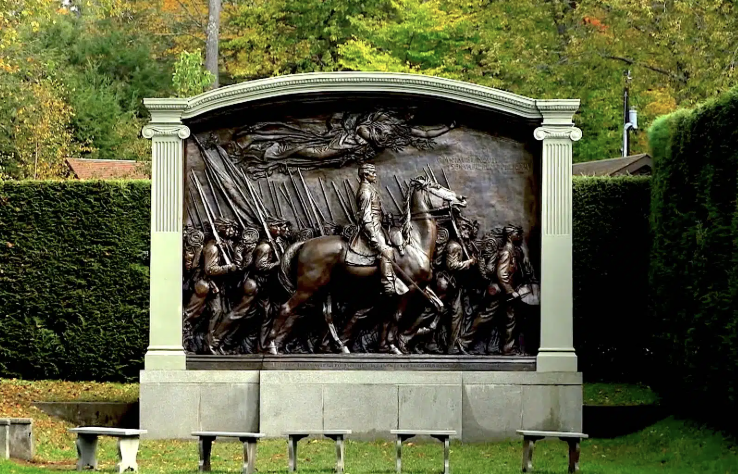
One of the most moving was the “Shaw Memorial,” honoring Colonel Robert Gould Shaw and the Black soldiers of the 54th Massachusetts Regiment. The original is in Boston, but seeing the Saint-Gaudens bronze casting really conveyed its emotional power.

The marching soldiers almost feel like they are moving!

We could not enter the studio today, but we read that it contains plaster casts, sculpting tools, unfinished studies, photographs, and the working process of a major artist. Saint-Gaudens and his family apparently turned the property into a gathering place for artists, writers, architects, and musicians during the years of the Cornish Art Colony.

Although the buildings were not open, it was still a great visit, with art, birdsong, gardens, the smell of pine and grass, and sunlight on bronze sculptures! Overall, a quiet artistic counterpoint to Revolutionary and Civil War sites!


