
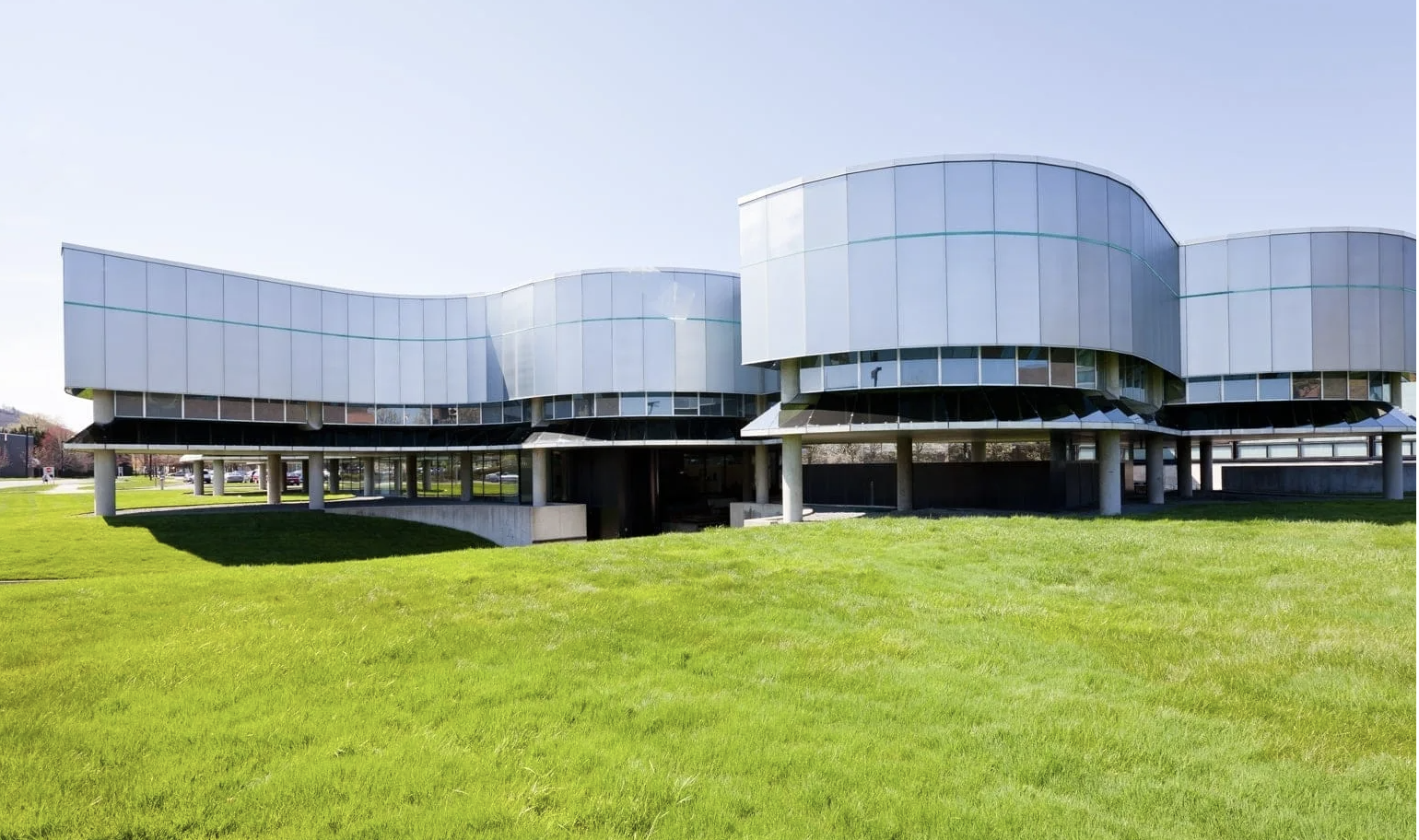
The drive from Ohio to the Corning Museum of Glass was a wonderful reminder of just what a beautiful New York is. We traveled through the state’s Southern Tier, a landscape of long wooded ridges, broad river valleys, and gently rounded hills. It felt mountainous, although I learned that, geologically, most of the area is part of the Allegheny Plateau, along the northern edge of the Appalachian region. Over millions of years, streams carved deeply into the plateau, creating the high ridges and winding valleys we admired from the highway. In other words, geology had been hard at work long before the New York Department of Transportation added the road!

Clearly Impressed …..

The landscape had already made the day memorable, but our visit to the museum added an entirely different kind of beauty.
The museum is much more than a collection of decorative glass. It tells the story of glass across thousands of years, from ancient vessels to modern sculpture, scientific innovations, and contemporary works that seem almost impossible to create.


I can never read fast enough in museums…so sometimes I have to take pictures so I can read it all later!!
It was fascinating to see how many ways glass can be used. We tend to think of windows, dishes, and drinking glasses, but the museum showed us glass as art, technology, history, and everyday life.

Some pieces were delicate and elegant, while others were bold, colorful, and surprisingly large.
It was easy to forget how much skill and imagination are involved in shaping something that begins as a glowing, molten material. What looks effortless in the hands of an expert is clearly the result of years of practice, precise timing, and a great tolerance for heat. I also could not get over the variety and imagination of these artists!
Light is such an important part of glass, and throughout the museum, it seemed to change how each piece looked as we moved around it.

The museum itself is bright, spacious, and beautifully designed, with galleries that encouraged us to slow down and look closely. Especially in the contemporary glass museum, I just couldn’t stop looking at the absolutely amazing pieces of art.
The combination of art, history, science, and craftsmanship made the museum engaging from beginning to end. We did take one of the guided tours, called the Wonder Tour, although unfortunately it did not add much to our understanding. We suspect it may have been the guide’s first day on the job—or perhaps her first day discovering some of the exhibits along with us! Still, by the time we left, we had a much greater appreciation for something we usually take for granted: glass!
Unlike Pullman, which we had recently visited, Corning was not a community planned, owned, and regulated by the company. In fact, the town was here before the glassworks arrived. Still, Corning is certainly a city strongly shaped by its namesake company. Corning Incorporated remains the dominant employer and founded the Corning Museum of Glass in 1951, although the museum is now an independent nonprofit. The company may not have built the town, but it has certainly helped define it.

This stop actually reminded me a bit of our Quincy Mine and Soo Locks stops on this trip— seeing an industry that shapes an entire region. Corning glass really did that for this town.
For dinner, we had a chance to experience downtown Corning, and it really is delightful—far more than simply a town built around a glass museum. The streets are lined with handsome restored 19th-century buildings, brick sidewalks, shady trees, inviting cafés, shops, and galleries.
