
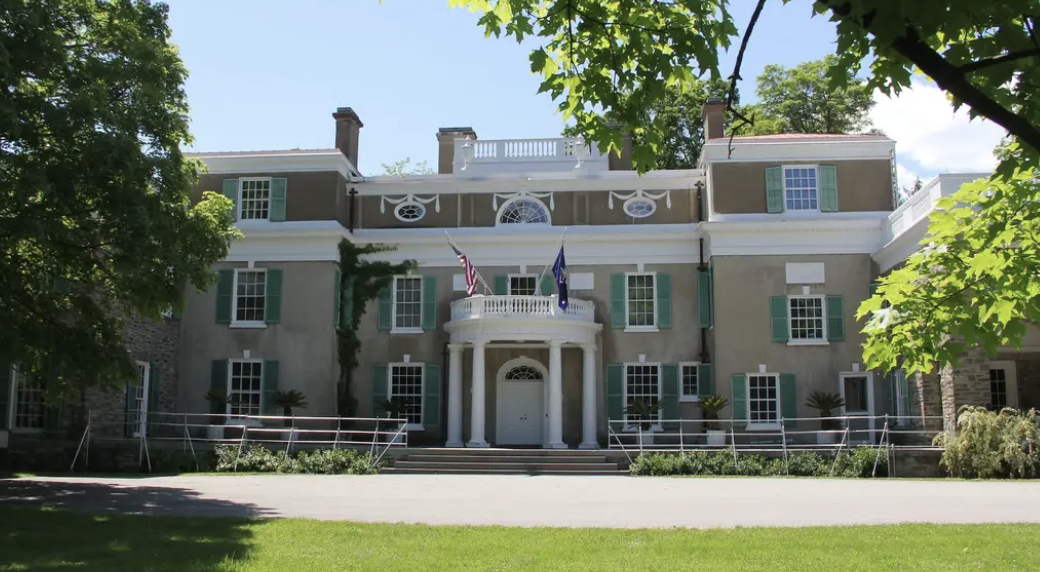
I just loved this house tour of the Franklin D. Roosevelt National Historic Site (Springwood). History became personal when I stood in the very rooms where this man lived and made decisions… decisions that still shape America today. We have toured many historic homes over the years, but every so often, one leaves me thinking about it long after I’ve walked out the front door. The Home of Franklin D. Roosevelt in Hyde Park was one of those places.

Like so many National Park Service sites, the experience was made even richer by an outstanding ranger who transformed what could have been a simple house tour into the story of a remarkable life. Instead of just pointing out furniture and family photographs, our guide helped us imagine a young Franklin growing up in these very rooms, later returning as Governor of New York and eventually as President of the United States. By the end of the tour, Springwood no longer felt like a museum—it felt like someone’s home.
Seeing Roosevelt’s books, his desk, family portraits, and the familiar objects of everyday life somehow makes history far more tangible than any textbook ever could. Walking through his home—and later exploring his Presidential Library and Museum—gave a much deeper appreciation for the extraordinary weight he carried during one of America’s most difficult eras.
Roosevelt assumed the presidency while the nation was trapped in the depths of the Great Depression. Millions were unemployed, banks were failing, and hope itself seemed in short supply. Through the New Deal, he launched programs that not only provided jobs and relief but also restored confidence in the government’s ability to help people in times of crisis. Many of those initiatives still shape our daily lives today. Social Security continues to provide financial security for millions of Americans. The Tennessee Valley Authority still generates electricity. National parks, trails, roads, bridges, and public buildings built during the Civilian Conservation Corps and Works Progress Administration remain part of the fabric of our country. We often enjoy these things without stopping to think about where they began.

And then, just as the nation was finding its footing again, Roosevelt faced the unimaginable challenge of leading America through World War II. It is difficult to comprehend the responsibility he shouldered—making decisions that affected not only the future of our nation but, in many ways, the future of the world.

There was tremendous personal sacrifice behind that public service. Roosevelt lived with the effects of polio for much of his adult life, yet he worked tirelessly, carefully managing how much of his disability the public saw because he feared it might undermine confidence during such uncertain times. By the end of his life, the strain of leading a nation through depression and war had taken a visible toll on his health. It is hard to imagine what those years must have demanded of him physically, mentally, and emotionally.

As we left Springwood, I found myself feeling gratitude… for Franklin Delano Roosevelt’s willingness to devote so much of his life—and ultimately much of his health—to serving his country during some of its darkest days. History has often felt distant to me. But at Hyde Park, standing where it happened, history felt wonderfully, humbly, and profoundly real.