
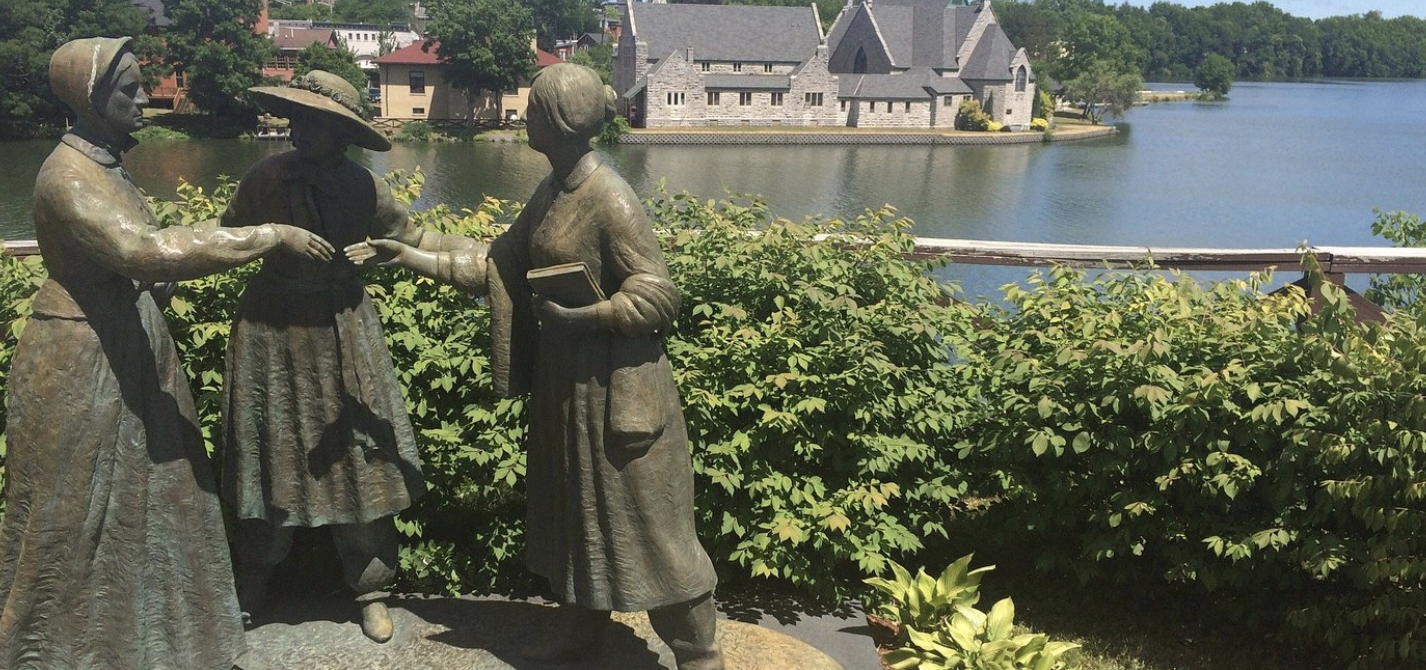
Nestled in the charming town of Seneca Falls, New York, the Women’s Rights National Historical Park stands as a stirring testament to the brave visionaries who dared to demand equality. Visiting this powerful place with our daughter and three of our grandchildren made the experience all the more meaningful — a moment of reflection shared across generations.
At the heart of the park is the Wesleyan Chapel, the very spot where, in 1848, the first Women’s Rights Convention ignited a movement that would ripple across centuries. Imagine the courage it took to stand up and voice such bold, radical ideas back then — ideas that today form the very bedrock of our understanding of justice and fairness. What was once shocking is now a call that still echoes: to question inequality wherever it persists — whether rooted in gender, race, disability, or beyond.
The visitor center does a beautiful job of bringing this history to life. Thoughtfully curated exhibits and artifacts tell the story, and even the 1993 documentary film felt fresh and compelling, connecting past struggles to the conversations we continue to have about equality today.
We also learned about the groundbreaking demands laid out in the Declaration of Sentiments: the right to own property, keep one’s wages, and fully participate in civic life — ideas that reshaped what it meant to be a woman and a citizen.
Our walk to the Elizabeth Cady Stanton House added another layer to the experience, even though we couldn’t step inside. Just standing outside the home of such a pivotal figure was enough to spark reflection.
What left the deepest impression — and I hope it did for the grandgirls too — was realizing how much of what I cherish today stems from what began here: my right to vote, to pursue an education, to own property, sign contracts, and chart my own course in life. Ordinary towns like Seneca Falls become extraordinary because of the courage, conviction, and vision of people who gathered and spoke out.
It’s a reminder not to take these hard-won rights for granted — and to keep the spirit of change alive for the generations that follow.