
6/12/2026
This visit to Grand Portage National Monument was one of those experiences that remind me why we love exploring the hidden corners of our country so much.

What was the Grand Portage?

The Grand Portage was an approximately 8.5-mile trail connecting Lake Superior with the inland waterways leading west toward the fur-trade country. The voyageurs would paddle their birchbark canoes on Lake Superior, then reach the end of the lake route and lift everything out of the canoe:
- The birchbark canoe itself (often weighing around 40–60 pounds)
- Bales of trade goods (cloth, tools, metal items, kettles, beads, firearms, and other supplies)
- Bundles of furs on the return trip (especially beaver pelts)
- Personal supplies and food

The voyageurs carried these loads on their backs along the trail — often with a tump line (a strap across the forehead) supporting the weight. A typical load could be about 90 pounds, and experienced voyageurs might carry multiple “pieces” at a time.
This spot was so important because it was the gateway between Lake Superior and the vast network of rivers and lakes farther inland. Canoes coming from the east brought European trade goods; canoes heading back carried valuable furs collected through trade with the Ojibwe and other Indigenous communities.
Imagine doing that trail in cold rain, snow, or mosquitoes, wearing wool and leather, carrying nearly 100 pounds, and then getting back into a canoe for more miles of paddling! It was an incredibly demanding way of life!
Located in northeast Minnesota on the shores of Lake Superior, Grand Portage National Monument tells the story of the time when the lake, the land, and the people were deeply connected.
Our first stop was the wonderfully modern visitor center with exhibits that helped set the stage for our visit. A beautifully produced film brought the history of Grand Portage to life — not just a collection of facts, but a story of the Ojibwe people, the voyageurs, and the incredible world of the fur trade. This was a great introduction to the importance of this very remote location and why it became such a vital meeting place centuries ago.


The highlight of the visit was the wonderful docent staff. They shared stories, answered questions, and helped us imagine the activity that once filled this area — canoes arriving, traders exchanging goods, and travelers preparing for the long journey along the famous Grand Portage Trail.
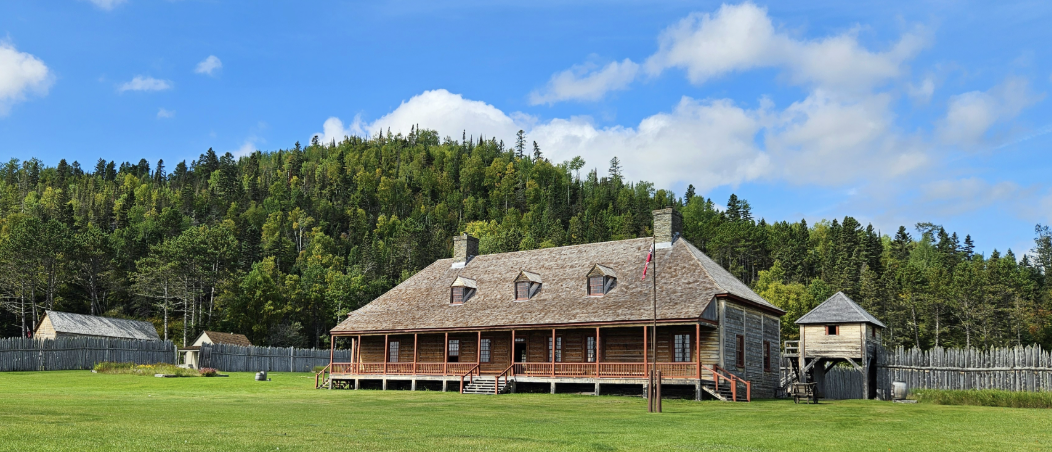
The reconstructed buildings and exhibits really helped us envision the past.


Standing there, surrounded by the beauty of northern Minnesota, it was easy to appreciate why this place mattered so much. Grand Portage is more than a historic site — it is a reminder of the cultures, friendships, challenges, and connections that shaped this region.


This was another very memorable stop on our Great Lakes adventure — a perfect blend of history, scenery, and storytelling — the kind of experience that makes our travels so rewarding.

But… as beautiful as this area is, one thought kept crossing my mind: how did people survive here? The cold and rugged conditions are hard to imagine. Looking out at this landscape, especially knowing (as a former Wisconsinite!) what winters must have been like, I found myself wondering how the Ojibwe and voyageurs endured and adapted to such a demanding environment.


There were no modern insulated jackets, heated gear, or little hand warmers tucked into gloves or pockets like we have today… just their knowledge, skill, and clothing made from natural materials.

Wow…their strength, knowledge, and resilience are truly impressive.