
7/12/2026
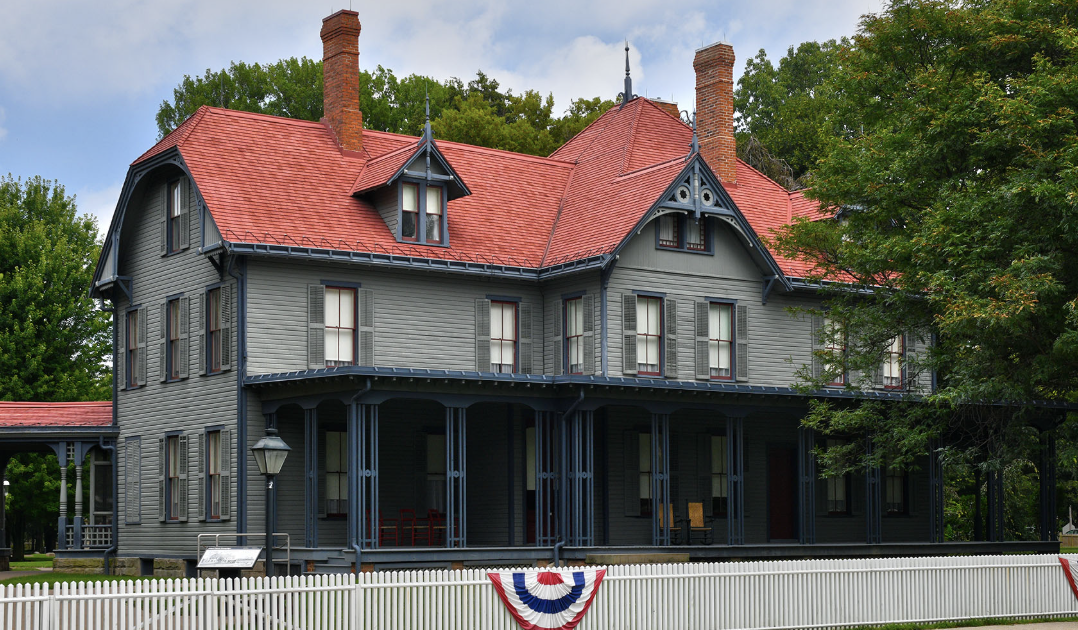
The James A. Garfield National Historic Site, in Mentor, Ohio, preserves the home and farm of James A. Garfield, the 20th president of the United States. The house was known as Lawnfield, a name reporters gave it during Garfield’s 1880 presidential campaign.

Garfield is one of those presidents many people know mainly because he was assassinated, but the site helps fill in the person behind the tragedy.

He was born poor in Ohio, became a teacher, served as a Civil War officer, spent many years in Congress, and was elected president in 1880. His presidency was painfully short: he was inaugurated in March 1881, shot on July 2, and died on September 19, 1881.

We started our tour at the Visitor Center, housed in the restored carriage house and horse barn. A short orientation film and museum exhibits did a fantastic job laying out Garfield’s remarkable rise and the tragic brevity of his presidency, cut short by an assassin’s bullet just months after taking office in 1881.
The centerpiece of the experience is the guided tour of the 20-room Victorian mansion. Over 80% of the furnishings inside are original to the Garfield family, making the home feel authentically lived-in. As we walked through the home, we were not just looking at furniture and portraits. We were seeing the real place he left behind.
The home also tells the story of Lucretia Garfield, his wife. After Garfield’s death, she preserved the house and added a Memorial Library wing, creating one of the earliest presidential libraries in the country. That makes the site feel less like a shrine and more like a family home that had to absorb national grief.
What makes the house especially important is the front porch campaign. In 1880, instead of traveling all over the country the way modern candidates do, Garfield greeted delegations of supporters from the porch of his home. Thousands of people came by train to Mentor, walked up to the house, and heard him speak. The National Park Service says the railroad tracks actually ran through the northern end of the property, making Lawnfield a kind of political destination.

Lawnfield might otherwise have felt like another historic presidential house, but the book had already made Garfield feel human — brilliant, principled, devoted to his family, and caught in a heartbreaking story.
The Death of James Garfield
The story of Garfield’s death is almost more painful than the shooting itself. He was not attacked at Lawnfield, his Ohio home, but at a railroad station in Washington, D.C., only a few months into his presidency. The bullet did not kill him immediately. What followed was weeks of suffering, as doctors repeatedly searched for the bullet with unsterilized fingers and instruments, ignoring the newer antiseptic practices that were beginning to change medicine elsewhere.

Last year, we listened to the audiobook Destiny of the Republic by Candace Malard. What we learned makes the Garfield story feel especially tragic. Here was a man who had survived poverty, war, and the rough world of politics, only to be defeated not simply by an assassin, but by the medical certainty of men who were wrong. Lawnfield does not contain the scene of that awful treatment, but it does make the loss feel personal. It is the home he left behind — the porch, the family rooms, the place where a full life was interrupted.
After touring the house, we took time to walk the shaded grounds. There were outbuildings such as the campaign telegraph office—where news from around the nation buzzed in live during the 1880 election—and peaceful views of the surrounding gardens and mature trees.
This was an enjoyable journey back to Victorian architecture and Civil War history, as well as an inspiring look at the life, family, and enduring legacy of a remarkable American leader.