
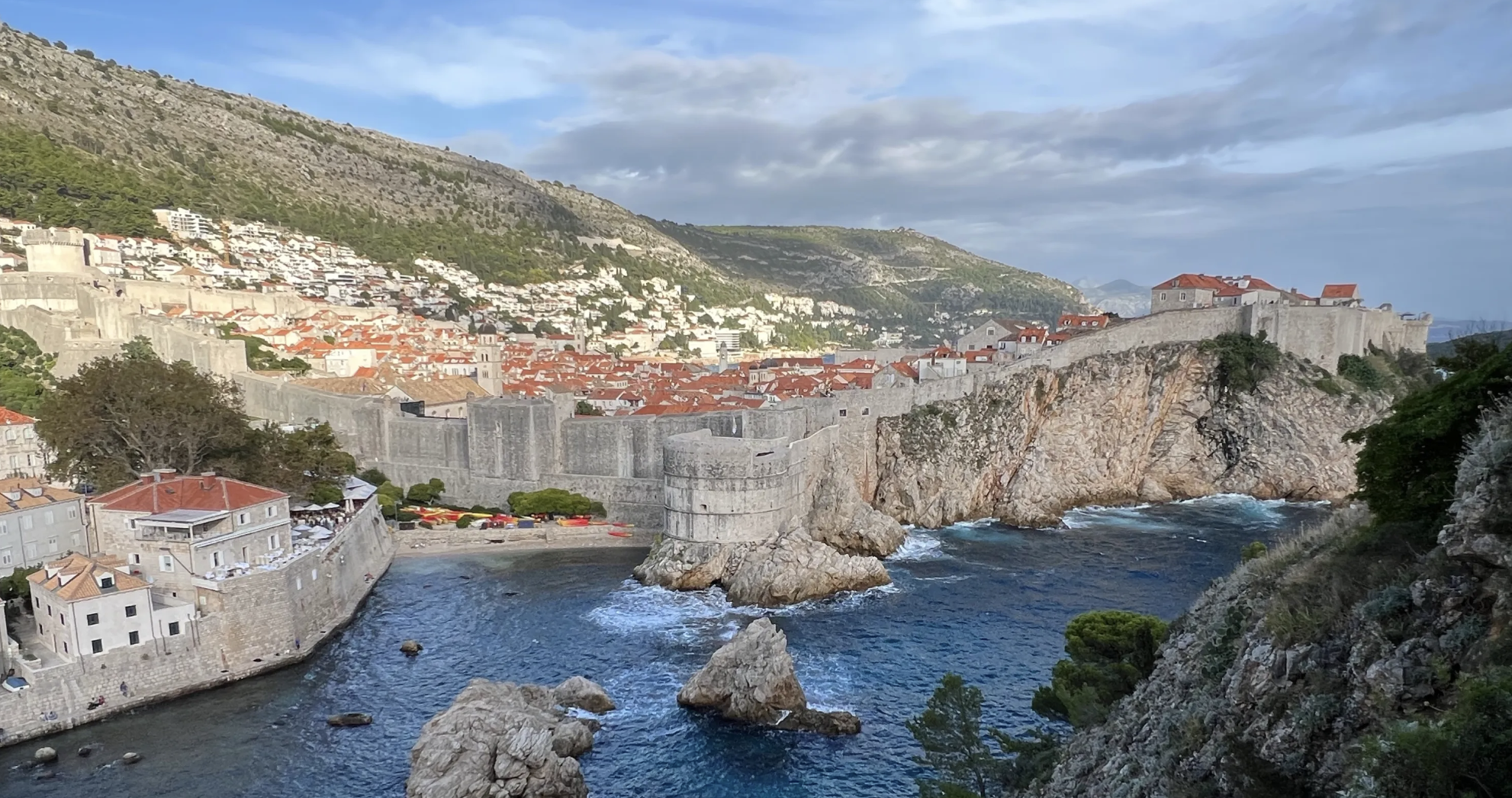
We started at the foot of the dragon! Located on a rocky spur at the country’s southernmost tip, Dubrovnik is renowned for its medieval walls and historic monuments.

In the past, Dubrovnik was an independent city-state (1358-1808) that rivaled Venice. It was also a fortress city that served as the base for a fleet of ships that carried trade between much of Europe and the Middle East. This period endowed it with the wealth of historic architecture that we can appreciate today.
Dubrovnik Old Town
𝗗𝘂𝗯𝗿𝗼𝘃𝗻𝗶𝗸’𝘀 𝗢𝗹𝗱 𝗧𝗼𝘄𝗻 is Croatia’s crowning jewel. We walked it from end to end, stopping in historic buildings and churches, restaurants and shops.

Some, like the 𝘽𝙖𝙧𝙤𝙦𝙪𝙚 𝙨𝙩𝙮𝙡𝙚 𝘿𝙪𝙗𝙧𝙤𝙫𝙣𝙞𝙠 𝘾𝙖𝙩𝙝𝙚𝙙𝙧𝙖𝙡, holds a renowned array of interior artworks.


Unfortunately, much of this architecture was heavily damaged during the breakup of Yugoslavia in the early 1990s. We saw pictures….the damage to the historic Old Town (a UNESCO World Heritage Center) by Serbian bombs was heavy.

Our guide, Martina, lived through it between the ages of 10-14. Fortunately, the city has regained much of its former splendor with the help of UNESCO and other donations, although restoration is still ongoing.

One night we walked along a picturesque promenade right on the edge of the Adriatic. We ended up at a Cave Bar….which was truly a bar built within a natural cave, with stalactites and all! This city seems to have it all!!!

Homeland War Museum
A cable car took us to the 𝙃𝙤𝙢𝙚𝙡𝙖𝙣𝙙 𝙒𝙖𝙧 𝙈𝙪𝙨𝙚𝙪𝙢 in the fortress on Srd Mountain. This was a painfully relevant setting for our conversation with a war survivor…. because so many violent attacks and casualties happened here. The museum was also holding the exhibition “Dubrovnik During the Homeland Wars.”


Balkan War Survivor, Mara Knezevic spoke with us about how Dubrovnik was battered during its brutal siege, and about how the grudges from that war still linger today. The Balkan wars in Croatia were fought between Croat forces loyal to the Croatian government (which sought independence from Yugoslavia) and the Serb-controlled Yugoslav People’s Army, which vehemently opposed the succession.

There was a multi-year siege (1991-95) with bombings, and ground combat (by ordinary citizens). Croatia was the victor but at an enormous cost ($37 billion in damage and tens of thousands of people either displaced or killed. Half of the population sought asylum in Bosnia and Herzegovina, leaving Croatia with a broken and dwindling populace. Today, the International Tribunal for the former Yugoslavia still works to resolve war crimes and assist victims.
On a happier note, 𝘽𝙪𝙯𝙖 𝘽𝙖𝙧 is tucked in the old town walls…. It is literally a hole-in-the-wall bar that sits on the edge of the cliff. It is hard to find, but what an amazing view. We watched kayakers, swimmers, and other boaters while enjoying our drinks.


We walked for about a mile on top of the castle walls to enjoy the views of the rooftops of Old Town and the blue Adriatic.


Our tour company always books our lodging in city centers. But because Dubrovnik is so busy dealing with tourists and cruise passengers, it is very difficult to lodge there.
We ended up at a swanky resort hotel…a disappointment but we were given a bus pass for the 10-minute ride into town. It was also located right on the Adriatic so we could hardly complain! Hard to believe today, but the hotel served as a refugee center for four years during the Balkan wars


𝗗𝘂𝗯𝗿𝗼𝘃𝗻𝗶k is often called the “Pearl of the Adriatic” and is considered one of the world’s most magnificent walled cities. There is a real sense of awe walking on the limestone streets that carry so much history. It was a great visit, but we do have to concede that walking so long on those cobblestones begins to get to these senior feet!!!
September, 2021, Traveling with Overseas Adventure Travel