
The Dodecanese Islands of Greece
The Dodecanese is a group of 12 large islands and numerous smaller ones in the southeastern Aegean Sea, near the coast of Turkey. Known for their rich history and stunning landscapes, various civilizations have influenced these islands, including the Greeks, Romans, Byzantines, Venetians, and Ottomans.
We visited three of the islands in this group: Kalymnos, Patmos and Kos.

Kalymnos
This is the 3rd most populous island in the Dodecanese group. Known as the “island of the sea sponge harvesters”, Pothia is the capital and port where our ship docked.
We climbed into an old bus (this island is not busy with tourists, so there is no updated equipment!!) for a Panoramic tour of the island. This was a fun adventure in really authentic Greece!


Known for its dramatic landscapes, Kalymnos is a mountainous island with steep cliffs, hidden coves, and crystal-clear waters. It is also a paradise for rock climbers, who flock from around the world to scale its famous limestone cliffs.


Monastery of Agios Savvas
Our first stop was the Monastery of Agios Savvas, which lies atop a hill overlooking Pothia. This beautiful stone church (with a red tiled roof) is dedicated to Agios Savvas, the island’s patron saint.

Its location provides an excellent view of the town, the port, and the sea.


In 1925, Savvas Hotzevitis came to the monastery and stayed until his death in 1947, serving as the priest and spiritual father. He was a great ascetic, iconographer, and miracle worker and is one of the few recently recognized saints of the Orthodox Church.
After his death, he was buried in a silver coffin inside the Monastery, which was renamed after him.

The Monastery of Agios Savvas houses a collection of religious icons, and has amazingly vibrant frescoes.


Sponge Fishing
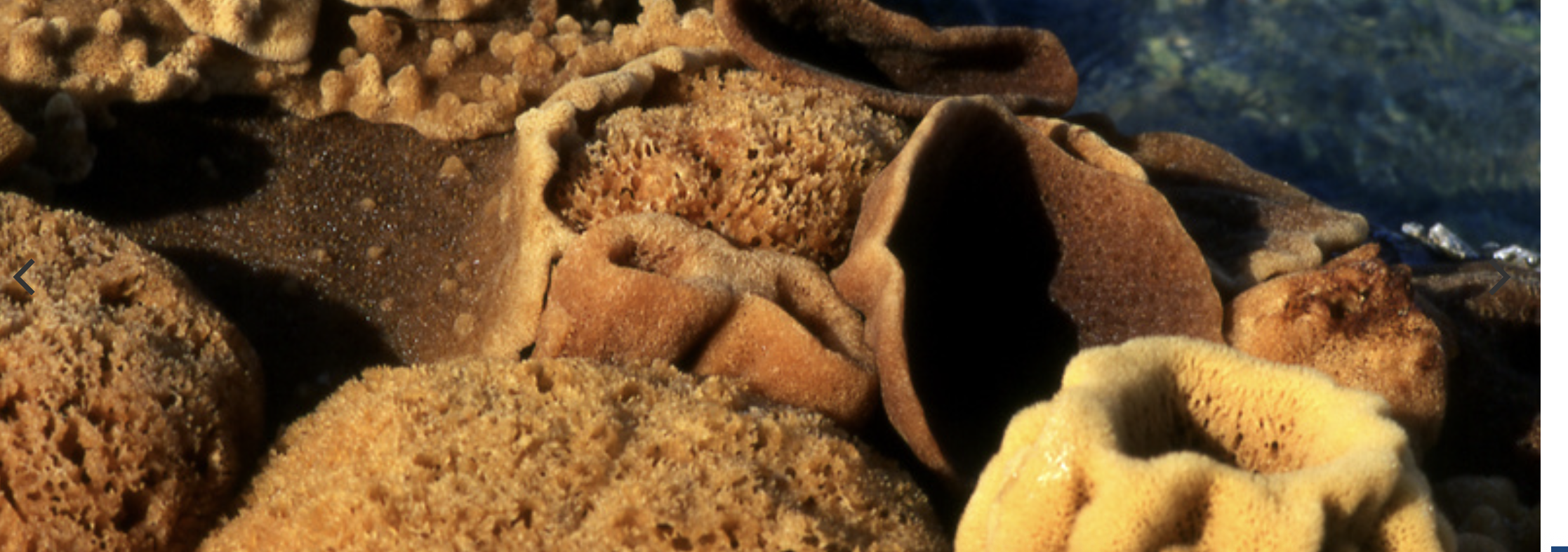
In the days of antiquity, Kalymnos was the sponge-fishing capital of the world. While the island’s rocky terrain made the land difficult to inhabit, the bounty of the sea nonetheless drew throngs of divers seeking to make their fortune.


We visited a local sponge workshop for a conversation with its owner about the role of sponge fishing in Kalymnos.
Our host, who runs the small sponge workshop with her husband, told us how sponge fishing remains an important part of Kalymnos’ economy. This workshop has been in their family for three generations, and, like many Kalymnos natives, sponges are a part of their identity.


Part of the discussion centered on the advantages of natural sponges over synthetic sponges. A summary of my rememberances and notes!
- Natural sponges are typically softer and more absorbent than synthetic sponges.
- Their porous structure allows them to hold more water and soap, making them ideal for gentle cleansing on delicate surfaces like the skin.
- They are more durable when properly cared for and have a longer lifespan because they are resistant to tearing and do not retain odors as easily.
- They are harvested in a sustainable way, and once disposed of, they decompose naturally without leaving harmful residues.

- Synthetic sponges can be designed in various textures, from rough and abrasive to soft and squishy.
- However, synthetic sponges tend to feel more artificial and can degrade faster, especially if exposed to chemicals or rough usage.
- They are non-biodegradable and made from petrochemical products.
- When discarded, they contribute to plastic pollution and take a long time to break down in the environment.
In the early 1900s, the sponge industry took off in Tarpon Springs, Florida with the arrival of Greek immigrants from Kalymnos. They brought advanced sponge diving techniques and introduced the use of diving suits and helmets, which allowed them to dive deeper and harvest more sponges. Their influence remains a vibrant part of the town’s identity today. (Note to self: We have been to Tarpon Springs but need to go back now that we know a little bit more about sponges!!)

While changes to the global economy and the invention of synthetic sponges have reduced the prosperity of the trade, sponge fishing remains a beloved part of Kalymnos’ cultural heritage. Fleets of ships still sail the surrounding seas in search of sponges today.
We are not shoppers, but we purchased a few authentic Greek sea sponges! Here is my shopper!!!

Kalymnian House Museum
The Kalymnian House Museum in Kalymnos is a fascinating collection that offered a glimpse into the traditional island way of life in the late 19th and early 20th centuries. It showcased and preserved the domestic culture and customs of Kalymnos from a bygone era. It certainly captures the essence of how islanders lived, particularly during the height of Kalymnos’ sponge-diving industry.

We were escorted through the small museum by the daughter of the woman who collected all of the things: authentic household items, traditional furniture, handmade textiles, ceramics, and tools that were used in daily life. The rooms are laid out as they would have been in a typical Kalymnian home.


One of the highlights is its collection and stories of items related to sponge diving, displaying tools, diving suits, and sponges.

This little tour introduced us quickly to the island’s culture, traditions, and past ways of living. I can’t imagine how much effort went into collecting these things!


This was another lovely visit and learning experience! We already love these Greek islands!!


2024, with Overseas Adventure Travel