
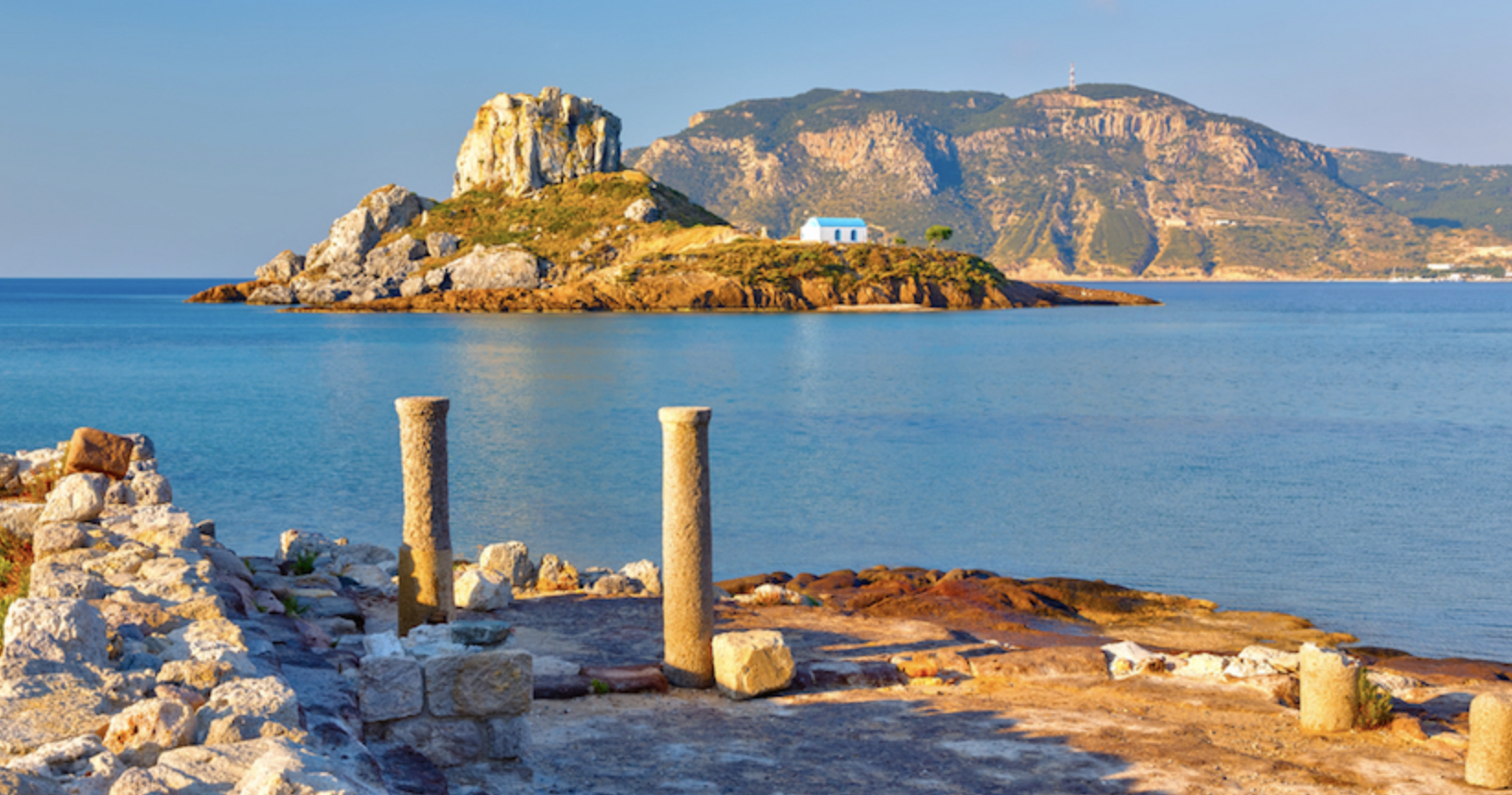
Kos is an island known for its rich history and beautiful landscapes. We were not originally scheduled to sail to this island, but weather conditions changed our itinerary and took us to this lovely stop. The island has been inhabited since antiquity, with significant influences from ancient Greek, Roman, Byzantine, and Ottoman civilizations.

Hippocrates
Hippocrates, often referred to as the “Father of Medicine,” was a Greek physician born around 460 BCE on the island of Kos. He is widely regarded as one of the most outstanding figures in the history of medicine. Hippocrates transformed the field by shifting medical thinking away from supernatural explanations for illness, advocating for a more rational, scientific approach.

Hippocrates’ later life was largely spent teaching medicine, and he established a school of medicine in Kos. He is thought to have died around 370 BCE. His life and work laid the foundation for medicine as a scientific discipline, and his ideas remained influential well into the Middle Ages.


One of the most enduring aspects of Hippocrates’ legacy is the Hippocratic Oath, an ethical code of conduct for physicians that still influences medical ethics today. The oath advocates for patient confidentiality and non-maleficence….doing no harm. We just experienced our grandson Liam taking this oath when he graduated from medical school in May!
Asklepion
We visited the ancient ruins of Asklepion, a healing temple dedicated to the god of medicine, Asclepius. The first Asklepions were established around the 5th century BCE.
The Asklepion typically consisted of several buildings, including the temple dedicated to Asclepius, dormitories for patients, and healing baths or spring-fed pools. Some also had theaters, as it was believed that entertainment, particularly music and drama, played a role in healing. Snakes, which were associated with Asclepius and symbolized renewal and healing, were often kept in these temples.

This was one of the most important medical centers in the ancient world. Treatment at the Asklepion combined both spiritual and practical methods. Patients underwent a process known as “incubation” where they slept in the temple overnight, hoping to receive healing dreams from Asclepius. Priests would interpret these dreams and prescribe remedies, often including exercises, baths, diet adjustments, and herbal treatments.


The Asklepions represent one of the earliest known examples of organized healthcare in history, blending religious belief with early scientific approaches to medicine. The Asklepion laid the foundation for early Greek medicine. Hippocrates was influenced by the holistic methods practiced at these temples.


This is not a very good pic of this…but very cool technology. As you point the screen at the ancient ruins, it shows what the site might have looked like! Another tour group was using these.
Since I do not have one of those….I had to get this reconstruction drawing from Mr. Google!!

Fortress of Neratzia, aka “Castle of the Knights“
The massive fortress was part of grand fortifications built by the Templar Knights of Saint John (around the end of the 14th century.) At that time, protecting the Crusaders’ path to the Holy Land from Ottoman attacks became a critical priority. The fort’s strategic position allowed the knights to control the sea routes between the Dodecanese islands and Asia Minor, making it a vital military stronghold.

The fort was initially constructed with thick defensive walls, towers, and a deep moat, which protected it from land and sea attacks. Although it dominates the city at the port, we were, unfortunately unable to enter it during our visit (because of restoration!). So, the above picture is what we might have seen.

This is all we were able to see! There are layers of stonework that blend local materials with remnants of ancient structures, including columns and stones from the nearby ruins of the Asklepion. It is also partially ruined due to earthquakes and centuries of conflict.


A Visit to the Olive Oil Producer
Kos has a long tradition of olive cultivation and oil production. We stopped at one of the producers that focus on high-quality, extra virgin olive oil. They use traditional methods alongside modern techniques and equipment to maintain the authentic flavor and nutritional benefits.
This is a small family-owned operation where we could see the process and taste samples!


Unfortunately, after visiting this olive oil plant, our new friend Barry had a fainting episode after getting off the bus and had to be taken to the hospital. It turns out he broke something in his leg and will now have to return to the US. We really missed this delightful couple.
We earned a lunch break!!
We never seem to tire of the very fresh, simple Greek food! Today, it was pita bread wrapped around a whole bunch of wonderfulness!!

2024, with Overseas Adventure Travel