
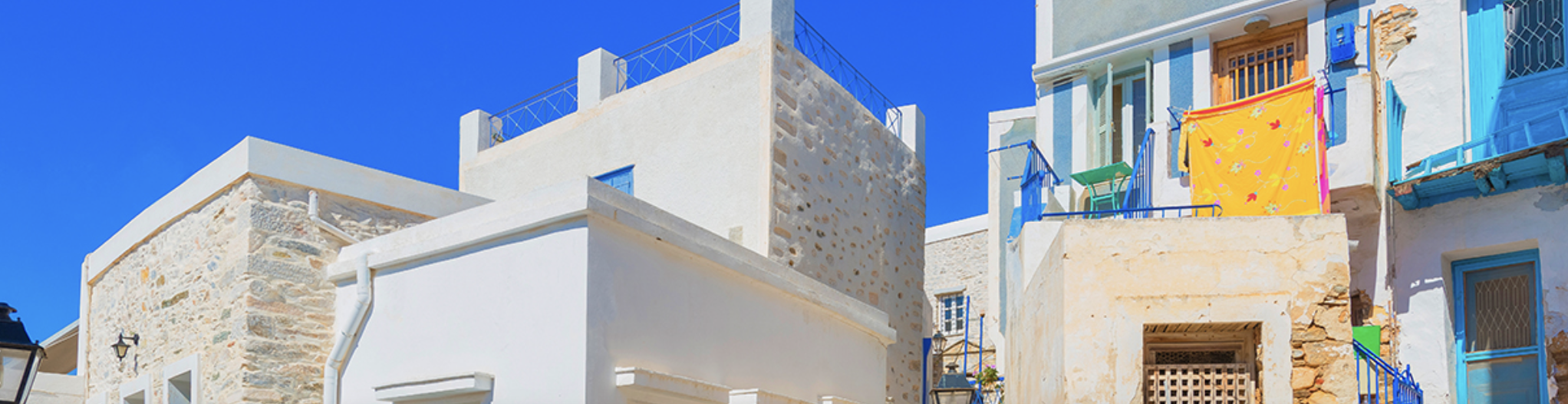
Syros is the capital of the Cyclades Island Group. We didn’t find sugar-cube villages and whitewashed lanes here like previous islands! Instead, we found streets and sidewalks made of marble!! (Of course, after all these years they are no longer sparkling clean!!)

We docked on the island’s eastern side in Ermoupoli, a bustling port known for its neoclassical architecture, vibrant harbor, and historical significance. Founded in the early 19th century during the Greek War of Independence, Ermoupoli became a thriving port and cultural hub, a legacy that endures to this day. Today, it is also a quick weekend getaway from Athens…only a couple of hours by high-speed ferry…so tourism is a brisk business here.

In the late 19th century, it was the main port for all of Greece, so it has a wealth of beautifully restored historic buildings, including old mansions and churches. Syros also has much more of a European feel….like a Venetian city.


As we found on the other islands, Greece traditionally observes a type of siesta time during the warmer months. This midday break, is usually between 2 and 5 p.m when small businesses, offices, and shops are closed. Unfortunately, our visit to Syros coincided with these hours, so we were unable to enter some of the buildings.
The Ermoupoli Town Hall: Its monumental façade and beautiful interiors make it one of Greece’s most significant town halls.

The Apollo Theatre: is one of Greece’s most celebrated theaters and a historical landmark. Built in 1864, it is modeled after Italy’s famous La Scala opera house in Milan and is often referred to as the “La Scala of the Aegean.” It hosts festivals of animation, dance, digital art, film, classical music, and jazz!

Villa Selena is a luxurious neoclassical mansion that is an upscale boutique hotel today.

This stone building is actually part of a “duplex”; it has big windows for the sun balcony and is connected to the next building by an arch.

Church of St. Nicholas: Ermoupoli is built on twin peaks–one Orthodox, the other Catholic, the heritage of a long Venetian occupation. Syros stands out in the Cyclades for its religious diversity, with both Orthodox and Catholic communities coexisting harmoniously.


The church is richly decorated with marble floors, elaborate frescoes, and gilded icons. One of the highlights is the magnificent marble pulpit.


Statue of Nike: often referred to as the Victory of Syros, is a sculpture located in Miaouli Square in the heart of Ermoupoli. The statue commemorates those who fought in the Greek War of Independence in 1821.

There are beautiful narrow streets in pastel colors. (Since it was siesta time, we could capture pics without a lot of people!!)


When the shops finally opened, our guide Effie shopped at her favorite store for Greece’s favorite sweets, loukoumi, a gelatin candy dusted with powdered sugar.

We were only on the island for a short time but…. Ermoupoli’s marble-paved streets, grand mansions, stately public buildings, and beautiful churches provided a great glimpse of the island’s prosperous past.
Visiting Syros is a good reminder of the uniqueness of each Greek island, and it leaves an impression that feels deeply rooted in Greek heritage.
2024, with Overseas Adventure Travel