
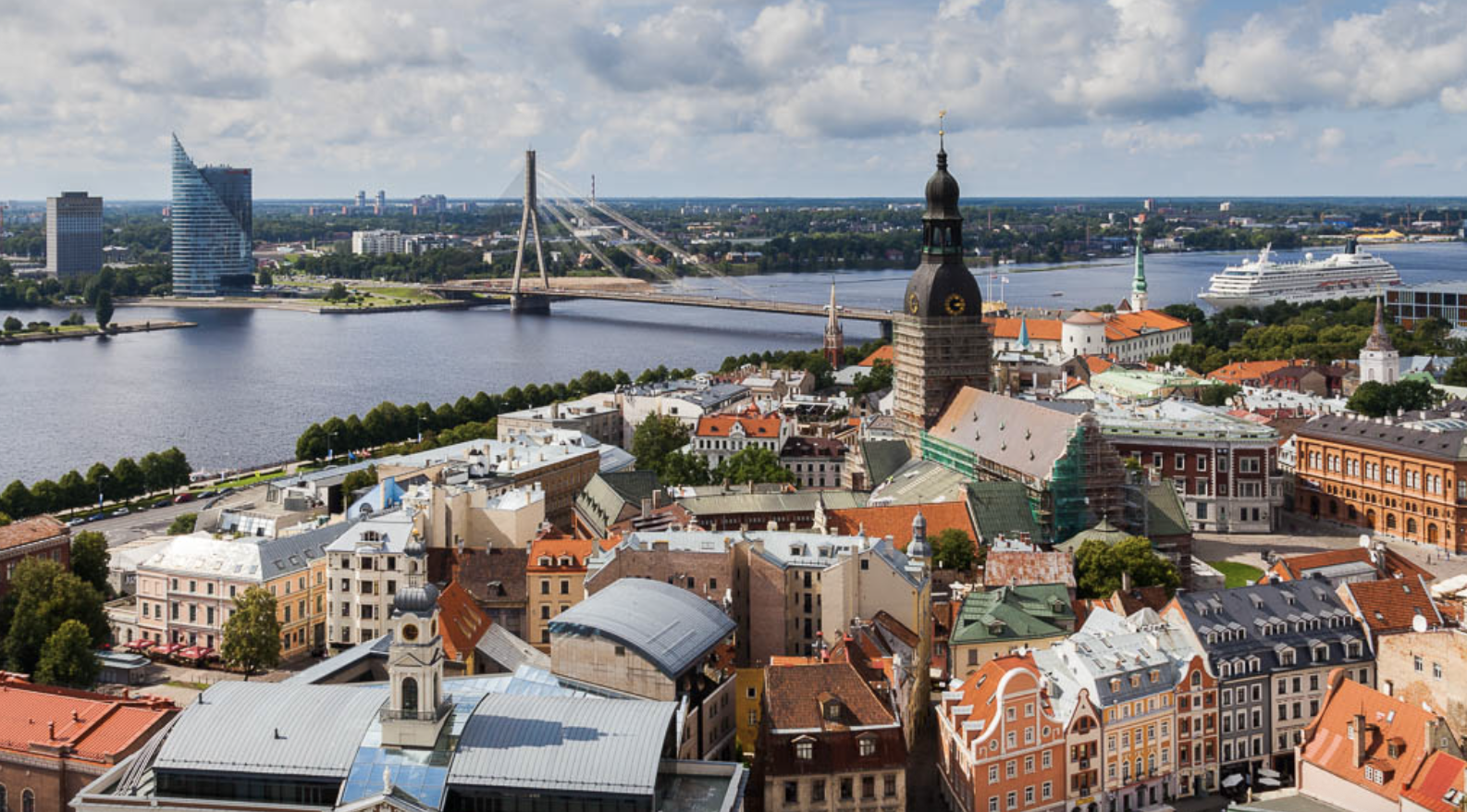
About Lithuania
Lithuania, tucked on the southeastern shore of the Baltic Sea, is the southernmost of the three Baltic States (along with Latvia and Estonia). They were all formerly behind the ‘Iron Curtain’ until the early 1990’s. This country is small but offers a captivating mix of medieval history, baroque architecture, pagan traditions, and modern creative energy.

In the Middle Ages, Lithuania was at the heart of one of Europe’s largest states: the Grand Duchy of Lithuania, which stretched from the Baltic to the Black Sea. In 1569, Lithuania joined with Poland to create the Polish-Lithuanian Commonwealth—a powerful and culturally rich union… until its partitions in the late 18th century. Lithuania spent long years under the Russian Empire and then Soviet rule, but reclaimed its independence in 1990—becoming the first Soviet republic to do so.

Lithuania is home to about 2.8 million people, making it the most populous of the three Baltic states.
The majority of residents are ethnic Lithuanians (roughly 85%), with Polish, Russian, and Belarusian communities adding cultural diversity. Lithuanian is the official language and one of the oldest living Indo-European tongues, still spoken today. The country is predominantly Roman Catholic, a faith that shapes many of its traditions and festivals, though there are also Protestant, Orthodox, and Jewish communities. Despite emigration challenges in recent decades, Lithuania maintains a strong national identity and a close connection to its heritage.