
Rumsiskes
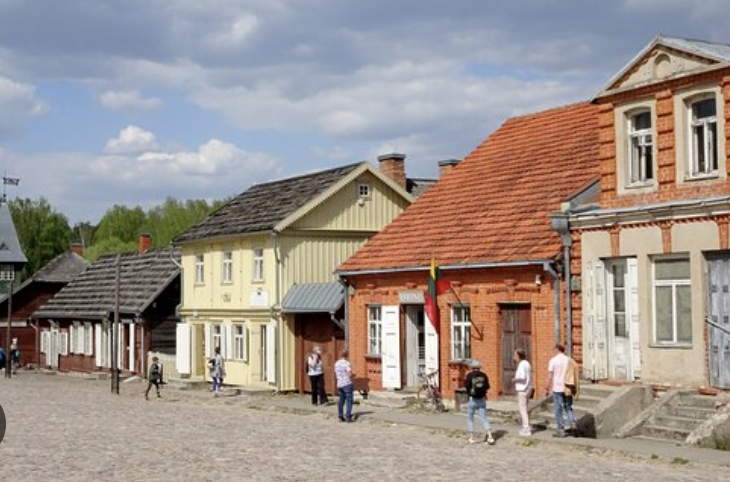
Just outside Kaunas lies one of Lithuania’s fascinating cultural treasures—the Rumsiskes Open-Air Museum. Spread across nearly 500 acres of rolling countryside, this vast museum is not confined within walls or glass cases. Instead, it brings history to life by recreating the rhythms of rural Lithuanian life across the centuries.
The museum is carefully arranged to showcase traditional homes, barns, mills, chapels, and farmsteads from all five ethnographic regions of Lithuania. The homesteads feel like they have been lifted straight from the past and set down here, complete with wooden shingles, rustic tools, and flower-filled gardens.


This felt like stepping into a living village. The attention to detail was extraordinary—woven textiles on the beds, clay pots in the kitchens, even beehives shaped like hollowed-out tree trunks.


At one point, we sat down for drinks and snacks while being led to sing Lithuanian songs!


A Place of Reflection

Not all corners of the museum were cheerful, however. A poignant section is dedicated to the Deportations of Lithuanians to Siberia during the Soviet era. (Deportations happened in all of the Baltic countries.)

We were very fortunate and honored to meet and speak with Irena, a 97-year-old Deportation survivor. She was one of the thousands torn from their homes during the Soviet occupation. This was a powerful and very moving experience.

She was born in the 1920s, during Lithuania’s brief period of independence between the world wars. When the Soviet Union occupied Lithuania in 1940, her family, like thousands of others, was labeled as “enemies of the people” — often simply because they were educated, owned land, or supported independence. In June 1941, at just a teenager, she and her family were awakened in the night by Soviet soldiers, given minutes to pack, and forced onto cattle cars bound for Siberia. The journey took weeks under brutal conditions, with little food or water.
In Siberia, they were sent to remote labor camps or “special settlements”. The winters were bitterly cold, and many deportees died from hunger, exhaustion, or disease. She survived by working in the fields or forests, cutting timber or growing potatoes in frozen soil. Despite everything, the deportees tried to preserve their Lithuanian identity — they sang songs, celebrated secret Christmases, and taught children their language. She eventually learned that her husband, who had been sent to another camp, was killed.
After Stalin’s death in 1953, she was eventually allowed to return to Lithuania. When she came home, she found that her family’s property was gone and life under Soviet rule remained difficult. Still, she rebuilt her life and became a quiet witness to her generation’s resilience (even as she had to continue hiding for several years). Now, at 97, she tells her story not with bitterness, but with determination that people remember — so that Lithuania’s suffering and survival under Soviet repression will never be forgotten.
A reconstructed yurt reminding us of the harsh conditions endured by those exiled families.


Standing there, imagining the hardships she endured, was a sobering reminder of how much this small nation has suffered.
Rumsiskes Open-Air Museum was much more than a collection of old houses—it was a walk through the soul of Lithuania, connecting us to the land, the traditions, and the endurance of a people who have weathered centuries of change. These Lithuanians still held on to their culture while surviving the Soviet occupation. There are places you visit and check off the list, and then there are places that pull you in deeply……Rumsiskes Open-Air Museum was one of those places.