
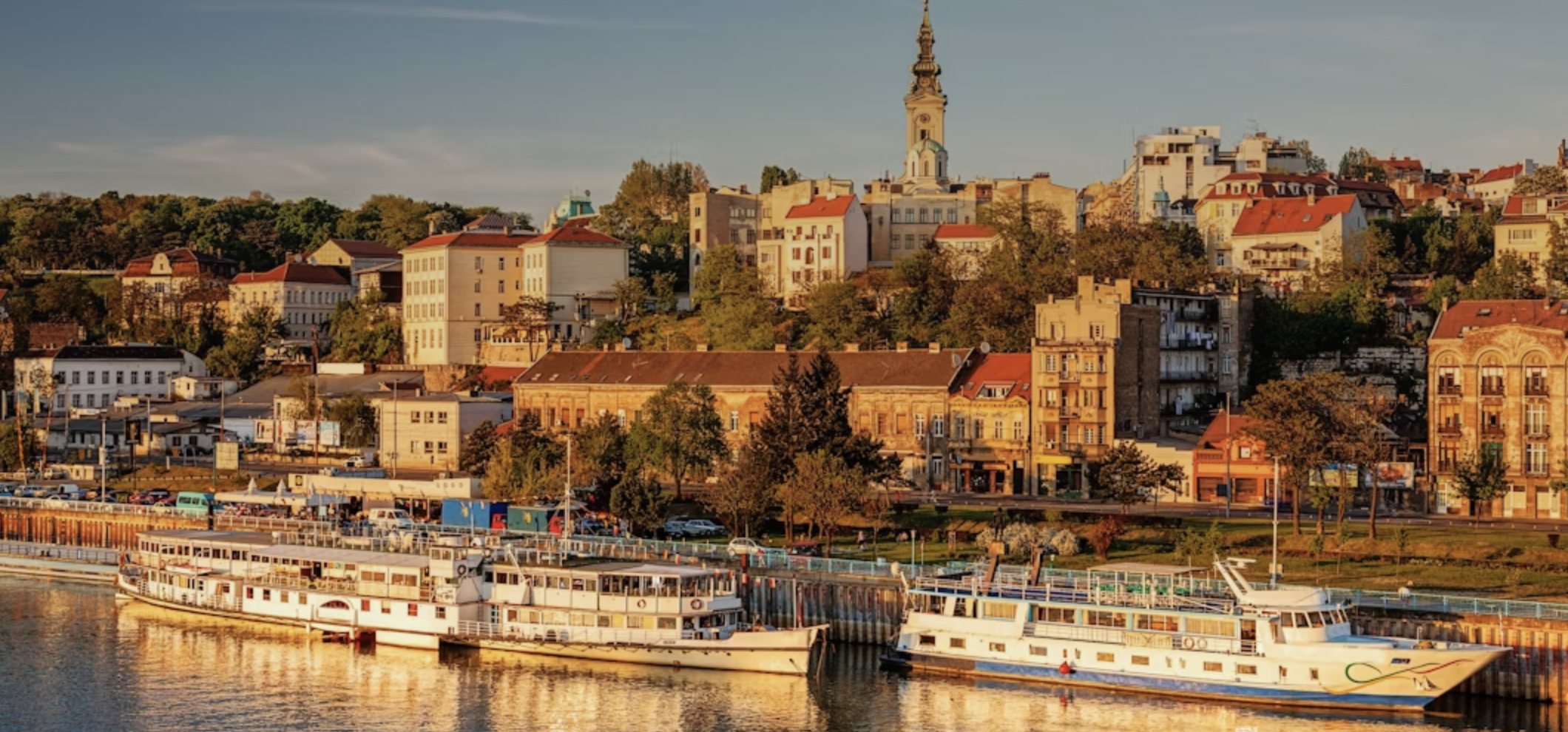
Landlocked Serbia sits at the very crossroads of Europe, where East meets West, and where centuries of empires have left their mark. It’s a place of mountains and monasteries, of river valleys and lively cities, where history feels close to the surface.
The story of Serbia is long and dramatic. The early Serbs were a Slavic people who settled in the Balkans around the 6th and 7th centuries. By the Middle Ages, Serbia had grown into a powerful kingdom under rulers who created a short-lived but impressive empire in the 14th century. The Ottoman Turks conquered Serbia in the 15th century, and centuries of Ottoman rule followed, leaving deep cultural traces — in music, food, and even the language. Serbia regained independence in the 19th century and later became part of Yugoslavia, a federation of South Slavic peoples that united after World War I.
The breakup of Yugoslavia in the 1990s was painful and complex, and Serbia found itself at the center of many of the region’s struggles. The Balkan Wars and the NATO bombing of Belgrade in 1999 remain vivid in the national memory. Yet modern Serbia has moved forward — reshaping itself as an independent republic, proud of its traditions but open to the world. The country is not yet a member of the European Union, but it continues to balance its ties between Europe and its deep-rooted Slavic and Orthodox heritage.
Serbia’s culture is a mix of influences. Serbian Orthodox Christianity shapes many customs and holidays, and the country is dotted with medieval monasteries whose frescoes are among the finest in Europe. Family life and hospitality are deeply valued, and the food is hearty and flavorful (grilled meats, fresh bread, and savory pastries like burek), often washed down with strong coffee or a glass of rakija, the local fruit brandy.
We visited the capital, Belgrade, which rises at the confluence of the Danube and Sava Rivers — an energetic city that is one of the liveliest capitals in Eastern Europe. Beyond Belgrade, the countryside reveals a quieter Serbia. Our travels also took us to the Fruška Gora wine region that produces excellent reds and whites. The Đerdap Gorge on the Danube is one of Europe’s great natural wonders. We also found ourselves in Novi Sad, home to the famous EXIT Music Festival, which shows Serbia’s youthful and creative energy.
Serbia may not always make the headlines for tourism, but those who come are often surprised by its warmth, resilience, and authenticity. That was certainly the case with us. It’s a country still writing its modern story — proud of its past and filled with soul.

Serbia


